TERA Gallery - African Art and Antiquities "Altering The Way You View The World Of Art" |

Type of Object:
Ethnic Group:
Country of Origin:
Material:
Deminsions:
Reference:
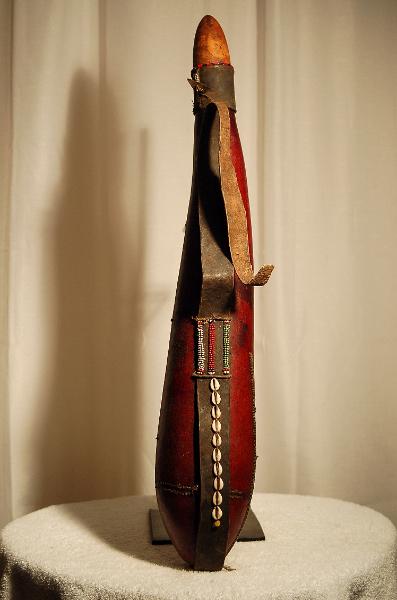
- Massai Milk Gourd
- The Massai produce these gourds by hollowing out a fruit
from the squash family. A hot corncob is inserted into the
hollowed out calabash and turned round and round. This
action causes the inside of the gourd to blacken, and it
causes the outside of the gourd to obtain a rich ochre
patina.
- This milk container has leather straps decorated with beads
and cowrie shells. There is a small stitched repair to the
gourd.
The Massai use these gourds to contain a mixture of yogart
like milk and blood, which is an important source of
sustenance for them. The interior would be sterilized by
burning. This mixture also has an important role to play in
the Massai people's customs, being used in ceremonies
and rituals.
The Massai are famous for their fierce warrior abilities, their
respect and love for cattle, and their intricate and colorful
beadwork adornment. The beading skills and traditional
patterns are passed from mother to daughter, from
generation to generation. Working outside while keeping
careful watch on their young children, these women create
delicate, multi-colored beaded jewelry, garments, and other
accessories worn by both men and women for every day
and for special occasions and feasts, and serve to identify a
person's place in society, and many of their designs and
colors carry symbolic meaning.
Ethnic Group:
- Massai Society
Country of Origin:
- Kenya
Tanzania
Material:
- Leath, Button, Beads, Gourd
Deminsions:
Reference:
- Saitoti's MAASAI